From the historic region of Jhal Magsi to the highest constitutional offices in Balochistan, the story of a political leader whose career spanned provincial government, tribal leadership and national affairs.
Introduction
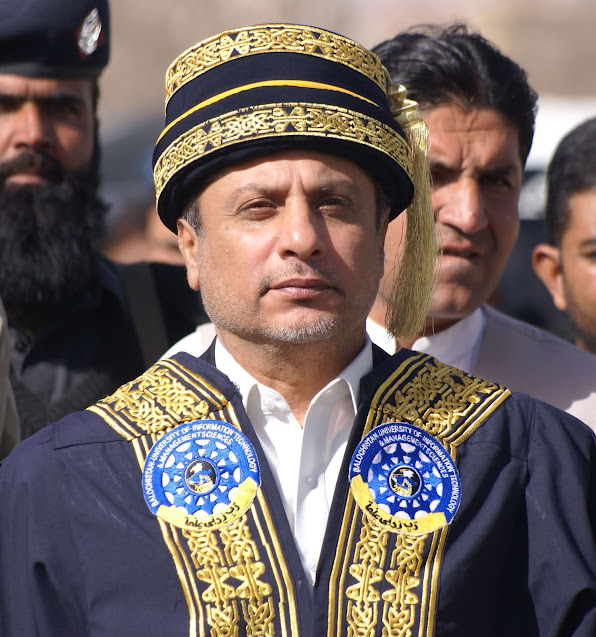
Nawab Zulfiqar Ali Khan Magsi is a prominent figure in the political history of Balochistan, Pakistan. He served as Chief Minister of Balochistan during the 1990s and later became Governor of the province, holding that office from February 2008 until June 2013. During his public career, he also served in provincial ministerial positions and represented his home constituency in the Balochistan Assembly.
His political journey reflects several important periods in Pakistan's history, including the development of provincial parliamentary institutions, changes in party politics, and the relationship between provincial governments and the federal administration.
Associated with Jhal Magsi, Nawab Zulfiqar Ali Khan Magsi belongs to a family identified with the region's tribal and political traditions. His career provides a valuable perspective on the role of regional leadership in Balochistan and the province's participation in Pakistan's constitutional and political system.
The Government of Balochistan officially lists him among the province's former governors, recording his tenure from 28 February 2008 to 9 June 2013. The history of the Balochistan Provincial Assembly also records his leadership of the provincial government during the 1993–1996 parliamentary period.
 Early Life and Family Background

Nawab Zulfiqar Ali Khan Magsi was born on 14 February 1954 in Jhal Magsi, Balochistan, according to published biographical accounts. His early life was connected with the region that later became the centre of his political career.
Jhal Magsi has an important place in the history and identity of the Magsi community. Like other parts of Balochistan, the area has experienced a political and social environment shaped by local traditions, tribal relationships, agriculture, geographical conditions and changing systems of government.
The title Nawab is associated with the traditional leadership of his family and community. However, hereditary or customary titles should be distinguished from constitutional positions such as chief minister and governor, which carry formal responsibilities under Pakistan's system of government.
The Magsi family's involvement in regional public life forms part of the wider historical context of his career. Nevertheless, his own achievements and political decisions should be considered separately from those of other members of his family.
Detailed primary documentation of his childhood, family upbringing and early personal experiences remains limited in the sources consulted. Further family records, interviews and archival research would help expand this part of his biography.
Education and Intellectual Background
Published biographical accounts identify Aitchison College in Lahore among Nawab Zulfiqar Ali Khan Magsi's educational institutions.
Aitchison College has a long history in Pakistan's educational landscape and has educated students who later entered public administration, politics, business and other professional fields.
Education is an important part of a political biography because it can establish the institutions through which a public figure developed before entering government. However, claims about particular qualifications, university degrees or academic distinctions should be based on reliable records.
The sources consulted do not provide a sufficiently clear and consistent primary record of every stage of Magsi's higher education. Accordingly, a definitive account of his university qualifications would require further verification.
Entry into Politics
Nawab Zulfiqar Ali Khan Magsi entered electoral politics in 1977, according to published accounts of his career. He contested an election as an independent candidate from his home constituency and was elected to the Provincial Assembly of Balochistan.
This early electoral success established the foundation of a political career that would eventually extend to the leadership of the provincial government.
Provincial assemblies are important institutions in Pakistan's federal system. Their responsibilities include provincial legislation, budget approval, oversight of the provincial executive and representation of local communities.
For a politician from Jhal Magsi, provincial representation provided an opportunity to participate in government while remaining connected to the concerns of the region.
Magsi subsequently returned to provincial politics in the 1985 elections and was re-elected in 1988 and 1990, according to published biographical records. These successive electoral appearances indicate the continuity of his political involvement across different periods of provincial government.
His early career unfolded during a time when Pakistan's political institutions were experiencing substantial changes. The country's return to elected parliamentary government during the 1980s and the competitive politics of the 1990s shaped the environment in which provincial leaders operated.
Service as a Provincial Minister
Before becoming chief minister, Nawab Zulfiqar Ali Khan Magsi held provincial ministerial responsibilities.
Published accounts associate him with the education and planning and development portfolios during the late 1980s and with the home affairs portfolio during the early 1990s.
These departments occupy important positions within provincial administration.
The education portfolio concerns the governance of educational institutions, policy implementation and the administration of provincial education services. Planning and development involves the preparation and coordination of development programmes, while the home affairs portfolio deals with aspects of internal administration and public order within the province's legal framework.
Service in these areas provided Magsi with experience of provincial administration before his elevation to the chief minister's office.
An assessment of his individual performance in each portfolio would require more detailed evidence, including departmental records, budget documents, policy decisions and contemporary reporting. The existence of a ministerial appointment alone does not establish the results achieved during a particular tenure.
First Term as Chief Minister of Balochistan
Nawab Zulfiqar Ali Khan Magsi first became Chief Minister of Balochistan in 1993 during a period of political transition.
Historical listings of provincial chief ministers record a short caretaker term from 30 May to 19 July 1993. This was followed by a period of caretaker administration under another chief minister before the next elected provincial government was established.
The distinction between caretaker and elected governments is important. Caretaker administrations generally operate during transitional periods, while an elected government derives its authority from the assembly formed following a general election.
Magsi's first period as chief minister therefore forms part of a wider sequence of political transitions in Balochistan during 1993.
Return to the Chief Minister's Office After the 1993 Elections
Following the October 1993 general election, Nawab Zulfiqar Ali Khan Magsi again became Chief Minister of Balochistan. The provincial assembly's historical record identifies him as Leader of the House in the Sixth Provincial Assembly, which served from 1993 to 1996.
His second term as chief minister extended from October 1993 until November 1996.
This period was an important chapter in his political career. As chief minister, he occupied the principal executive office in the provincial government and was responsible for leading the administration within the constitutional and legal framework of the time.
The chief minister works with the provincial cabinet, oversees government departments and participates in the legislative process through the assembly. The office also involves coordination with the federal government on matters affecting provincial administration, public finance and national policy.
Balochistan's geographical scale and diverse local circumstances create particular challenges for public administration. Government responsibilities include the provision of public services, development planning, infrastructure, education, health and the administration of law and order.
Magsi's tenure should be examined within these provincial circumstances rather than in isolation from the political and institutional conditions of the 1990s.
The Balochistan Provincial Assembly's historical publication provides a valuable institutional record of the period. It records that the Sixth Assembly, during its term, passed eight bills and considered a range of parliamentary questions, motions and resolutions. These are figures for the assembly as a whole, not measures attributable exclusively to Magsi.
A fuller assessment of his government would require contemporary records concerning its policies, expenditure, administrative decisions and development programmes.
Political Leadership During the 1990s
The 1990s were a significant period in Pakistan's parliamentary history. Governments changed at the federal and provincial levels, political alliances evolved, and the relationship between elected administrations and the country's constitutional institutions remained a central issue in national affairs.
Balochistan's provincial politics developed within this broader environment. Regional parties, independent representatives and established political families all played roles in the formation of governments and the organisation of provincial representation.
Magsi's political career during this period connected his home constituency with the provincial executive. His progression from elected assembly member to chief minister demonstrates the role provincial electoral politics played in determining leadership.
It is important, however, to distinguish the documented chronology of his offices from broader claims about the political impact of his administration. Evaluating his government's effectiveness requires evidence concerning policy implementation and public outcomes.
The 1997 Election and Continued Provincial Politics
Published biographical accounts state that Nawab Zulfiqar Ali Khan Magsi returned to the Balochistan Provincial Assembly in the 1997 general election.
This result continued his electoral involvement after his second term as chief minister. His experience in provincial administration meant that he remained a significant figure in the region's political landscape.
Pakistan's political environment changed substantially following the military takeover of October 1999. Provincial institutions and the structure of political authority subsequently underwent further changes.
Magsi's career must be understood against these broader developments, although a complete account of his activities during every intervening year requires additional primary documentation.
Appointment as Governor of Balochistan
One of the most significant milestones in Nawab Zulfiqar Ali Khan Magsi's career came in February 2008, when he was appointed Governor of Balochistan.
Dawn reported on 28 February 2008 that the federal government had appointed the former chief minister to the position. The appointment followed the February 2008 general election, in which Magsi had also won his home provincial constituency as an independent candidate.
He assumed the governorship on 28 February 2008 and remained in office until 9 June 2013, according to the official list maintained by the Governor's House.
The governor's office is constitutionally distinct from that of the chief minister. The governor serves as the province's constitutional head, while the chief minister leads the elected provincial government and exercises executive authority through the cabinet and assembly.
As governor, Magsi occupied a position connecting provincial constitutional administration with the federal framework. His tenure extended across several years of political change and included periods in which relations between provincial and federal authorities were important public issues.
At the time of his appointment, contemporary reporting recorded his stated willingness to engage with political and tribal leaders to address unrest in Balochistan. Dawn also reported his comments concerning missing political workers and the need for dialogue.
These statements are part of the historical record of his public position at the beginning of his governorship. They should not be confused with proof that every stated objective was subsequently achieved.
The Governorship and Balochistan's Political Challenges
Magsi's tenure as governor coincided with a difficult period in Balochistan's political and security history.
The province faced challenges involving militancy, political tensions, public security and demands concerning the treatment and representation of local communities. These issues formed part of a broader and complex relationship between Balochistan and Pakistan's federal institutions.
During his governorship, Magsi publicly expressed support for political dialogue. His reported comments at the beginning of his term reflected the importance of engagement with political and tribal figures in efforts to address the province's difficulties.
The governor's constitutional responsibilities, however, are different from those of the elected provincial executive and the federal government. A fair account must identify which institution held responsibility for particular decisions and avoid attributing every government action or failure to one officeholder.
The political and security history of Balochistan during this period involved multiple actors and competing interpretations. A comprehensive historical assessment should consider official records, independent reporting and the experiences of communities affected by events.
Governor's Rule and Appointment as Chief Executive in 2013
In January 2013, Balochistan entered another period of political transition following the suspension of the provincial government's normal functioning and the imposition of governor's rule.
The change followed the deadly bombings in Quetta in January 2013 and the political response to the security crisis. The provincial administration led by Chief Minister Aslam Raisani was removed, and the governor assumed expanded responsibilities under the arrangement established at the time.
Nawab Zulfiqar Ali Khan Magsi was appointed Chief Executive of Balochistan during this period, according to published historical accounts.
This was a distinct role from his ordinary position as governor. It reflected the exceptional political and constitutional circumstances prevailing in the province at the beginning of 2013.
The episode demonstrates the importance of understanding the legal arrangements governing exceptional periods of provincial administration. Governor's rule and a chief executive arrangement should not be described as equivalent to the routine functioning of an elected provincial government.
The circumstances surrounding the 2013 transition remain part of the wider political history of Balochistan, particularly in discussions of security, provincial autonomy and the relationship between elected institutions and federal authority.
Resignation and the End of His Governorship
Nawab Zulfiqar Ali Khan Magsi's tenure as Governor of Balochistan ended on 9 June 2013.
The change followed the 2013 general election and the formation of a new federal political administration. Nawaz Sharif's government moved towards appointing a new governor, and Magsi's resignation was accepted.
The Governor's House's official historical list records 9 June 2013 as the end date of his tenure. The subsequent appointment of Muhammad Khan Achakzai marked the beginning of a new period in the province's governorship.
Magsi's departure concluded more than five years in the constitutional office, making his governorship one of the major phases of his public career.
The Magsi Family and Regional Heritage
The Magsi family has a recognised place in the political and social history of Jhal Magsi and Balochistan. Its public history includes figures who have participated in provincial and national politics across different generations.
The family context helps explain the traditional title associated with Nawab Zulfiqar Ali Khan Magsi and the regional connections that form part of his public identity.
Nevertheless, family heritage and personal political achievement are different subjects. Each family member's career should be researched and documented on its own merits, using reliable historical sources.
For historians and researchers, the wider story of Jhal Magsi can be explored through district records, provincial assembly proceedings, historical publications and oral histories. Such sources can help document how local leadership, social institutions and modern electoral politics developed alongside one another.
Preserving this history is especially valuable for future generations seeking to understand Balochistan's regional heritage.
Personal Life
Publicly available historical accounts focus primarily on Nawab Zulfiqar Ali Khan Magsi's political career and official responsibilities. Information about his personal life, family relationships and private interests is less comprehensively documented in the official sources consulted.
Details about family members should be included only when supported by reliable public records or authorised family information. This is particularly important in a biography intended to remain available as a historical reference.
A future edition could incorporate verified family photographs, first-hand recollections and interviews to provide a more complete account of his life beyond public office.
Political Legacy and Historical Importance
Nawab Zulfiqar Ali Khan Magsi's public career spans several decades of Balochistan's political history. He entered electoral politics in the late 1970s, held provincial ministerial responsibilities, became chief minister during the 1990s and later served as governor from 2008 to 2013.
These milestones establish his place among the political figures who occupied important provincial offices during periods of significant change.
His career also illustrates the different functions of elected and constitutional offices. As a member of the provincial assembly and chief minister, he participated in representative and executive government. As governor, he served in a distinct constitutional role. In 2013, he also became chief executive during an exceptional period of provincial administration.
His long-term legacy should be examined through the public record of his decisions, policies, administrative responsibilities and contributions to provincial institutions. Such an assessment requires evidence of specific outcomes and should recognise the wider political circumstances in which he served.
A balanced biography neither assumes that length of service proves success nor overlooks the historical importance of holding major public office. Instead, it records the facts, identifies the relevant context and leaves room for further research and informed historical interpretation.
Conclusion
Nawab Zulfiqar Ali Khan Magsi occupies an important place in the modern political history of Balochistan.
From his entry into electoral politics in 1977 to his service as chief minister during the 1990s and governor between 2008 and 2013, his career connected the local political traditions of Jhal Magsi with the institutions of provincial government.
His governorship coincided with significant political and security challenges, while his role as chief executive in 2013 placed him at the centre of an exceptional period in the province's administration.
For Magsi Around the World, documenting his life offers an opportunity to preserve the political history of Jhal Magsi and the broader Magsi heritage. Continued research into official records, assembly proceedings, contemporary news reports and family archives can enrich this biography and make it an increasingly valuable resource for readers, students and future historians.
References and Further Reading
Official and historical sources
- Governor's House, Balochistan — Former Governors of BalochistanOfficial record of Nawab Zulfiqar Ali Magsi's governorship, including the dates of his tenure.
- Provincial Assembly of Balochistan — Fifty Years History of the Provincial Assembly of BalochistanInstitutional history documenting the provincial assemblies and Magsi's role as Leader of the House during the 1993–1996 assembly.
- Dawn — “Former CM Magsi appointed governor,” 28 February 2008Contemporary reporting on his appointment as governor and his public comments about political dialogue in Balochistan.
- Governor's House, Balochistan — Views of the Honourable Governor Balochistan Nawab Zulfiqar Ali MagsiAn official publication associated with his time in office, offering historical and pictorial material relating to the province.
geo magsi sahab
ReplyDeleteGeo magsi nawab
ReplyDelete